
How SEO and Paid Advertising Can Work Together to Increase Qualified Demand
Run in isolation, SEO and paid media compete for the same budget conversation instead of reinforcing each other. Here's how GrowCarte pairs the two so organic content lowers the cost of the paid campaigns feeding off it.
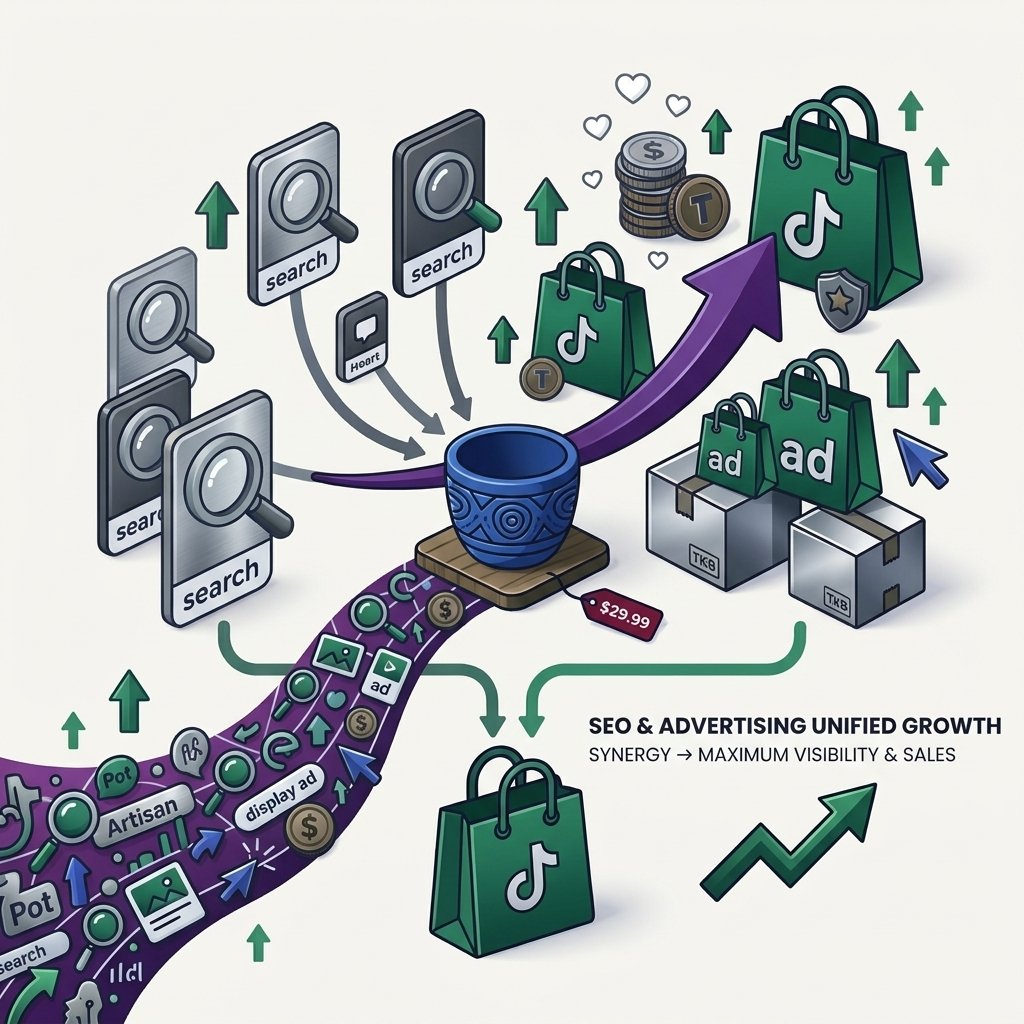
Rising cost per lead, with SEO and paid working against each other.
A service business is spending steadily on Google and Meta ads, but cost per lead keeps climbing as competition bids up the same keywords. Meanwhile, their organic search presence is thin — no consistent content roadmap, and no tracking connecting SEO efforts to actual leads or revenue. The two channels are run separately, with separate reporting, so nobody can see where the real demand is coming from.
One connected strategy instead of two competing budgets.
- Technical and on-page SEO fixes to resolve crawl issues, page speed, and structured data gaps holding rankings back.
- Keyword and content roadmap built around the terms most likely to convert, not just the highest search volume.
- Analytics and conversion tracking rebuilt so every lead source — organic and paid — is attributed correctly.
- Google and Meta campaign restructuring to stop overlapping spend on keywords already winning organically.
- Creative testing across ad copy and landing pages to lower cost per lead on the terms still worth paying for.
- Unified reporting for traffic, leads, revenue, and net-profit efficiency across both channels in one place.
The same four-step structure behind every GrowCarte engagement.
Diagnose
Technical SEO audit and paid account review run together, so overlap and gaps between the two channels are visible from day one.
Prioritize
Fixes and campaign changes ranked by impact on qualified leads, not raw traffic or impressions.
Execute
Content, technical fixes, and campaign restructuring shipped on a consistent weekly cadence across both channels.
Measure & scale
Unified reporting reviewed weekly, shifting paid budget away from terms now winning organically and toward what's still worth paying for.
What we track to know if SEO and paid are actually working together.
The same balanced framework used across every GrowCarte channel, applied specifically to SEO and paid advertising.
Organic visibility
Ranking movement and organic traffic on the keyword roadmap that actually drives leads.
Cost per lead
Blended cost per qualified lead across organic and paid, tracked as one number.
Lead quality
How many leads convert to real revenue, not just form fills.
Net-profit efficiency
Revenue generated relative to combined SEO and ad spend.
Lower cost per lead, without cutting spend.
If your paid cost per lead keeps climbing while SEO sits neglected, the pattern above is usually the fix: a content roadmap that starts winning the keywords ads are currently paying for, tracking that shows which channel actually deserves credit for a lead, and a single reporting view instead of two disconnected dashboards. Paired correctly, organic growth doesn't replace paid — it makes the paid budget go further.
Questions about this SEO + paid advertising scenario.
This page describes an illustrative growth scenario — it shows the type of work and measurement approach GrowCarte uses when pairing SEO and paid advertising, not a specific client's guaranteed outcome.
They can be engaged separately, but the biggest efficiency gains usually come from running them together under one reporting view.
Technical fixes can help within weeks, but meaningful ranking movement from new content typically takes 60–90 days to show up.
Primarily Google and Meta, with TikTok Ads added when it fits the brand's audience and product.
Want to see where SEO could be lowering your ad costs?
Book a strategy call and we'll walk through your current SEO and paid setup together — no generic pitch, a plan built around your category and budget.